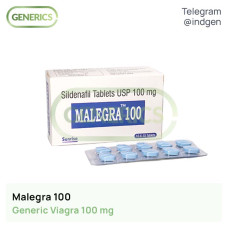
MALEGRA 100
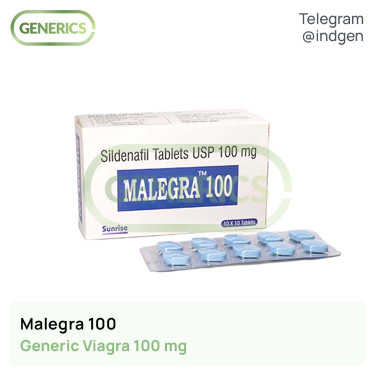
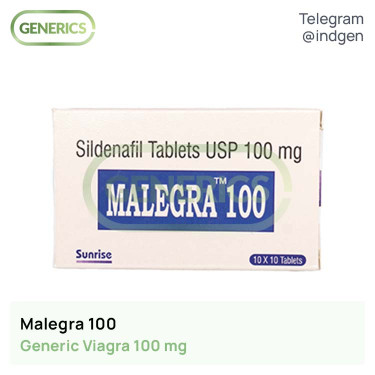
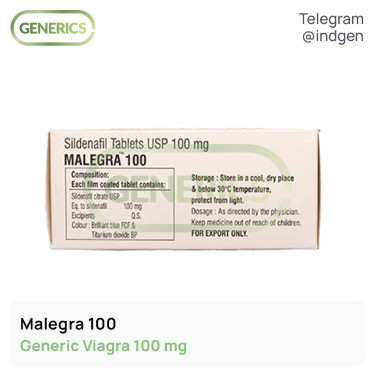
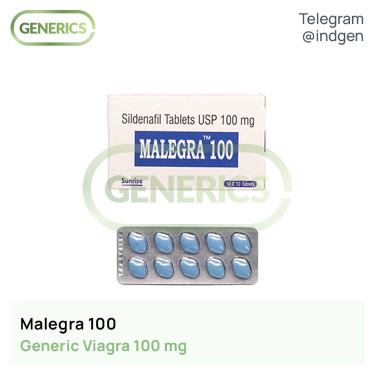
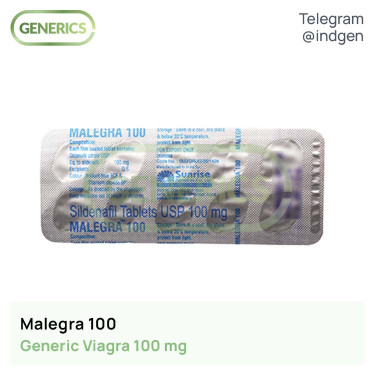
- Manufacturer:
- Sunrise Remedies
- Active ingredient
- Sildenafil Citrate
- Dosage
- 100 mg
- Best before date
- Until 2026-2027
- Reception
- 1 hour before the act
- Time of action
- Up to 5-6 hours
- Daily dose
- 100 mg
- Compatibility with alcohol
- No

Available product types:


Malegra 100 is a modern, highly effective medical drug created specifically for the treatment of erectile dysfunction in adult men. Erectile dysfunction (often referred to in everyday life as impotence) is a condition in which a man experiences systematic difficulties in achieving an erection or cannot maintain it at a level sufficient for conducting a full and satisfactory sexual intercourse.
The drug is available in the form of oral tablets and is produced by a large Indian pharmaceutical company Sunrise Remedies Pvt. Ltd., which specializes in creating quality generics. Sildenafil (in the form of sildenafil citrate) at a dosage of 100 milligrams per tablet acts as the main, active, and sole therapeutic component of the drug. Sildenafil is a legendary substance that was originally developed by scientists to treat angina pectoris and coronary heart disease, but during clinical trials, its powerful side effect was discovered, which consists in stimulating male potency.
It is extremely important to learn a few fundamental rules regarding the administration of Malegra 100. Firstly, this product is not an artificial aphrodisiac or a hormonal stimulant. The tablet is not capable of causing sexual desire (libido) out of nowhere. The drug will work exclusively if a man experiences natural sexual arousal and tactile or psychological sexual stimulation is present. If there is no stimulation, the drug will remain inactive, and an unwanted spontaneous erection will not occur.
Secondly, the tablet must be swallowed whole, washed down with a glass of clean water, approximately 30–60 minutes before the intended intimacy. It is forbidden to break, crush, or chew the tablet, as this may disrupt the release of the active substance in the gastrointestinal tract. Thirdly, Malegra 100 is intended only for adult men. The drug is strictly prohibited for use by women, as well as children and adolescents under eighteen years of age, as its effects on these groups have not been studied and can be dangerous.
Thus, for the average consumer, Malegra 100 acts as a reliable physiological "assistant" that temporarily neutralizes vascular spasms and restores the body's natural ability to achieve a strong erection, returning self-confidence and the joy of a full sexual life to men.
Deep pharmacological profile and biochemical mechanism of action
Moving on to professional analysis, it should be noted that erectile dysfunction is a complex neurovascular phenomenon. The physiological mechanism of penile erection involves the release of nitric oxide (NO) molecules in the corpus cavernosum directly during sexual stimulation. Nitric oxide acts as a powerful local mediator. It penetrates the smooth muscle cells of blood vessels and activates the enzyme guanylate cyclase. Activation of this enzyme catalyzes the conversion of guanosine triphosphate (GTP) into cyclic guanosine monophosphate (cGMP).
It is cGMP that is the key secondary messenger that triggers a cascade of intracellular reactions leading to a decrease in the concentration of free calcium in the cytosol of smooth muscle cells. This causes a pronounced relaxation of the smooth muscles of the vascular wall and trabeculae of the corpora cavernosa, which, in turn, contributes to a sharp increase in arterial blood flow in the penis and the formation of an erection.
However, there is a natural mechanism for regulating this process in the body. The enzyme phosphodiesterase type 5 (PDE-5), which is present in high concentrations in the tissues of the corpus cavernosum, is responsible for the hydrolysis (breakdown) of cGMP to inactive 5'-GMP. Sildenafil, being the main component of Malegra 100, is a potent and highly selective inhibitor of PDE-5. Sildenafil has a structural similarity to cGMP and competitively binds to the catalytic site of the PDE-5 enzyme. By blocking the breakdown of cGMP, sildenafil promotes the accumulation of this substance in tissues, which repeatedly enhances and prolongs vascular relaxation in response to the release of nitric oxide. Since the primary release of NO occurs only in the presence of sexual stimulation, sildenafil does not exert an erectogenic effect in its absence.
The pharmacokinetics of sildenafil is characterized by rapid absorption after oral administration. The bioavailability of the drug is about 40% due to the pronounced first-pass effect through the liver. The maximum concentration of the substance in blood plasma is achieved on average after 60 minutes (ranging from 30 to 120 minutes) when taken on an empty stomach. It is important to note that taking the drug together with food, especially food rich in lipids, leads to a decrease in the rate of absorption, while the time to reach maximum concentration is delayed by approximately 60 minutes, and the concentration itself is reduced by 29%.
The metabolism of sildenafil is carried out mainly in the liver by microsomal cytochrome P450 isoenzymes, chiefly CYP3A4 (major pathway) and CYP2C9 (minor pathway). The main circulating metabolite — N-desmethylsildenafil — also possesses activity against PDE-5, which is approximately 50% of the activity of the unchanged drug. The half-life of sildenafil and its active metabolite is about 3–5 hours. Excretion occurs mainly in the form of inactive metabolites with feces (about 80% of the administered dose) and to a lesser extent with urine (about 13%).
Manufacturing and commercial characteristics of the drug
The production of Malegra 100 is carried out by Sunrise Remedies Pvt. Ltd., based in India. The Indian pharmaceutical market holds a leading position in the world in the production of high-quality generics, and this company has certifications confirming compliance with Good Manufacturing Practice (GMP) and ISO 9001:2015 standards. This ensures a high degree of purification of the active substance and stability of the therapeutic effect from batch to batch.
To systematize commercial and production data, a table of product specifications based on available trade and clinical registers is presented below.
| Specification parameter | Detailed characteristic |
| Trade name |
MALEGRA 100 MG |
| Active pharmaceutical ingredient |
Sildenafil Citrate |
| Mass fraction of active substance |
100 mg per tablet |
| Dosage form |
Oral tablets |
| Pharmacotherapeutic group |
Drugs for the treatment of erectile dysfunction, PDE-5 inhibitors |
| Manufacturer |
Sunrise Remedies Pvt. Ltd. |
| Country of origin |
India |
| Shelf life (Life Span) |
24 months from the date of manufacture |
| Packaging format |
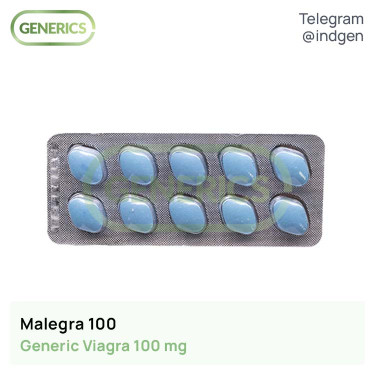
Blisters, most often 10 tablets per strip or box (Box). Some variations, such as Malegra 100 Green, are supplied with 5 tablets per strip. |
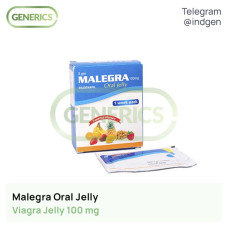
In addition to the standard form of oral tablets, the manufacturer has diversified the product line to meet the various needs of patients. The range includes tablets with a reduced dosage of Malegra 50 mg, which are recommended for initiating therapy or for patients with mild forms of vascular disorders. Specialized forms are also produced, such as Malegra 100 Green and effervescent soluble tablets Malegra 100 Effervescent with orange flavor, which provide faster absorption and may be preferred for patients with dysphagia.
Clinical indications and strict instructions for use
The only officially approved medical indication for the prescription of Malegra 100 is the therapy of erectile dysfunction in adult men. The drug is not indicated for the treatment of premature ejaculation, increasing libido, or as a recreational drug in healthy men.
The dosing regimen requires an individual approach, but the standard protocol is to take one tablet (100 mg) as needed, approximately one hour before the intended sexual contact. The effective therapeutic window during which the patient can expect the development of an adequate erection, provided there is stimulation, begins 30 minutes after administration and can last up to 4–5 hours.
The drug should be taken orally, swallowing the tablet whole and washing it down with a sufficient amount of liquid. Violation of the tablet's integrity before swallowing is unacceptable. The drug can be taken both with food and on an empty stomach. Clinical experience shows that taking it on an empty stomach provides the most predictable and rapid onset of effect, while fatty food acts as a physiological barrier that delays absorption.
It is strictly forbidden to exceed the maximum daily dose, which is 100 mg (one tablet) within 24 hours. The concept of "missed dose" in the context of sildenafil therapy is usually not applied, as the drug is used on a situational basis. However, if the doctor has prescribed regular intake of the drug to treat concomitant pathologies (for example, in pulmonary hypertension, although other trade names of sildenafil are usually used for this), the missed dose should be taken as soon as possible. Doubling the dose to compensate for a missed one is a gross violation of the treatment protocol and leads to a sharp increase in the risk of toxic reactions.
In case of overdose, when a patient intentionally or accidentally takes a dose significantly exceeding 100 mg, there is no specific antidote. Symptoms of overdose include intense throbbing headache, pronounced dizziness, dyspepsia, severe flushing of the face, and persistent nasal congestion. Therapy in such cases is purely supportive and aimed at stabilizing hemodynamics. The use of hemodialysis is inappropriate, as sildenafil has a high degree of binding to plasma proteins (about 96%) and is not eliminated unchanged through the kidneys.
Detailed analysis of contraindications to use
The vasodilatory properties of sildenafil necessitate careful medical screening before starting therapy. Malegra 100 has an extensive list of absolute and relative contraindications, ignoring which can lead to fatal consequences.
An absolute contraindication is the simultaneous use of sildenafil with nitric oxide donors, organic nitrates, or nitrites in any of their forms, whether tablets (nitroglycerin, isosorbide mononitrate), patches, sprays, or inhalant recreational drugs (the so-called poppers). Nitrates stimulate cGMP production, while sildenafil blocks its degradation. Such a synergistic interaction leads to uncontrolled relaxation of the vascular wall and a sharp, critical drop in blood pressure, which can provoke deep myocardial ischemia, myocardial infarction, or death.
The second category of absolute contraindications is severe pathologies of the cardiovascular system. Sexual activity itself is associated with a certain cardiac risk. Therefore, the drug is contraindicated in patients for whom sexual activity is not recommended due to their health condition. This group includes individuals who have suffered a myocardial infarction or stroke within the last 6 months, patients with unstable angina, severe heart failure, as well as uncontrolled arterial hypotension or hypertension.
The drug is also contraindicated in patients with severe hepatic impairment (for example, Child-Pugh class C liver cirrhosis) and end-stage renal disease, as impairment of clearance mechanisms will lead to toxic accumulation of sildenafil in the body. In addition, as noted earlier, the drug is absolutely not intended for use in women, children, and adolescents.
Relative contraindications require the use of the drug with extreme caution and under strict specialist supervision. These include anatomical deformations of the penis, such as Peyronie's disease, angulation, or cavernous fibrosis. In such patients, artificial stimulation of erection may be accompanied by severe pain syndrome and additional tissue damage. Individuals with blood disorders, such as sickle cell anemia, multiple myeloma, or leukemia, are at an increased risk of developing priapism — a pathological, painful erection lasting more than 4 hours. Priapism is a medical emergency; delay can lead to irreversible fibrosis of the corpora cavernosa and complete, permanent loss of erectile function.
Ophthalmological risks deserve special attention. Sildenafil therapy should be stopped immediately in case of sudden visual impairment or loss of vision. There is a rare but serious pathology — non-arteritic anterior ischemic optic neuropathy (NAION), the risk of which may increase on the background of taking PDE-5 inhibitors. Patients with hereditary degenerative retinal disorders, in particular retinitis pigmentosa (which is often accompanied by a genetic defect of retinal phosphodiesterase PDE-6), must avoid taking sildenafil. Caution is also necessary when prescribing the drug to patients with a predisposition to bleeding or during an exacerbation of peptic ulcer disease, as PDE inhibition may affect platelet aggregation capacity.
Undesirable effects and toxicity profile
Like any pharmacological agent of systemic action, Malegra 100 can cause a number of side reactions. They are directly related to the main mechanism of action of sildenafil — systemic vasodilation and inhibition of phosphodiesterase isoenzymes in various tissues. In most cases, undesirable effects are transient, mild or moderate, and resolve on their own as the drug is eliminated from the systemic circulation.
For a deep understanding of the safety profile, the table below presents the most common side effects correlated with their physiological nature.
| Physiological system | Manifestations of undesirable effects | Etiology and pathogenesis of occurrence |
| Central nervous system | Headache, dizziness | They occur due to vasodilation of cerebral vessels and meningeal arteries, as well as a slight transient decrease in blood pressure. Headache is often throbbing in nature. |
| Cardiovascular system | Flushing of the face (hyperemia), feeling of heat | Caused by a sharp expansion of small peripheral capillaries in the upper part of the body under the influence of cGMP accumulation. |
| Gastrointestinal tract | Dyspepsia (indigestion), nausea, epigastric pain | Inhibition of PDE leads to relaxation of the smooth muscle of the lower esophageal sphincter, which can cause gastroesophageal reflux and heartburn. |
| Respiratory system | Nasal congestion (rhinitis) | The PDE-5 enzyme is present in the nasal turbinate mucosa. Its blockade causes local vasodilation, which leads to blood congestion and mucosal edema, making nasal breathing difficult. |
| Ophthalmological system | Blurred vision, cyanopsia (seeing surrounding objects with a blue tint) | Sildenafil has some cross-reactivity and is capable of weakly inhibiting PDE-6 — an enzyme involved in the phototransduction cascade in the retina of the eye. |
| Musculoskeletal system | Myalgia (muscle pain), diffuse back pain | The mechanism is not fully understood, but a connection with cross-inhibition of PDE-11, an isoenzyme present in significant quantities in skeletal muscles, is assumed. |
| Skin integument | Erythematous rash, allergic reactions | Individual hypersensitivity reaction of the immune system to the sildenafil molecule or auxiliary substances in the tablet (dyes, excipients). |
Patients should be instructed to avoid driving vehicles and working with complex machinery if they experience dizziness, decreased concentration, or impaired visual acuity after taking the drug. If serious allergic reactions (angioedema, difficulty breathing) or priapism occur, emergency medical attention is required.
Compatibility with medicinal products (Interactions)
Polypragmasy, or the simultaneous administration of several medicinal products, is a serious problem when prescribing PDE-5 inhibitors. Sildenafil metabolism is closely linked to the cytochrome P450 system, which causes a wide range of potentially dangerous pharmacokinetic and pharmacodynamic interactions.
As detailed in the contraindications section, nitrates and nitric oxide donors are strictly incompatible with Malegra 100 due to the risk of refractory hypotension.
The second critical interaction is associated with antihypertensive drugs, in particular with alpha-blockers (such as tamsulosin, terazosin, doxazosin), which are widely used in urology for the treatment of benign prostatic hyperplasia, as well as in cardiology. Both groups of drugs dilate blood vessels. Their combined use can provoke severe orthostatic hypotension — a condition in which blood pressure drops sharply when changing from a lying or sitting position to a standing position. This can lead to fainting and serious injury. Prescription of sildenafil to patients receiving alpha-blockers is allowed only after complete stabilization of hemodynamics, and it is recommended to start therapy with a minimum dose (25 mg), which in the case of Malegra 100 mg tablets may require the use of another form of the drug or consultation with a doctor about the possibility of dividing the tablet, despite general recommendations to swallow it whole.
Interaction with new classes of cardiological drugs deserves special mention. Clinical data suggest that the use of potent vasodilators (such as sodium nitroprusside) in combination with neprilysin inhibitors and angiotensin receptor antagonists (sacubitril/valsartan) in patients with heart failure can lead to significant hypotension. Although direct large-scale studies of the interaction of sildenafil specifically with the sacubitril/valsartan combination in outpatient practice are insufficient, the overall risk profile of vasodilators requires extreme caution. Prescribing sildenafil to patients on sacubitril/valsartan therapy should be accompanied by strict blood pressure monitoring to avoid an additive hypotensive effect.
Interactions at the CYP3A4 isoenzyme level can radically change sildenafil concentration in blood:
CYP3A4 Inhibitors: Drugs that block the function of this liver enzyme slow down sildenafil breakdown. These include macrolide antibiotics (erythromycin), azole antifungals (ketoconazole, itraconazole), and antiretroviral drugs (ritonavir, saquinavir). For example, co-administration with ritonavir increases the maximum concentration of sildenafil in the blood by more than 300%, and systemic exposure (AUC) by 1000%. In such cases, sildenafil dosage should be radically reduced (not more than 25 mg in 48 hours) under strict medical supervision.
CYP3A4 Inducers: Drugs that accelerate metabolism in the liver (rifampicin, carbamazepine, phenobarbital, St. John's wort extract) will contribute to too rapid excretion of sildenafil from the body, which will lead to a complete lack of the expected therapeutic effect from taking Malegra 100.
Interaction with ethanol (alcohol) and food products:
Consumption of alcoholic beverages on the background of taking sildenafil is highly discouraged. Ethanol has its own vasodilatory and sedative effect. Their combination can exacerbate side reactions such as dizziness, tachycardia, and hypotension. In addition, ethanol depresses reflex arcs in the central nervous system responsible for sexual arousal, which can negate the effectiveness of the drug. As for food products, patients should avoid taking tablets with grapefruit juice, as it is a selective inhibitor of CYP3A4 in the intestinal wall and can unpredictably increase sildenafil bioavailability.
Patients with psychiatric disorders or asthma taking specialized medications are also required to inform their treating physician to assess potential risks of indirect interactions.
Drug storage rules
To ensure the stability of sildenafil citrate chemical structure and maintain its pharmacological activity throughout the declared shelf life (24 months), strict storage rules must be observed. Malegra 100 tablets must be stored in the original factory packaging (blister), protecting them from moisture and oxidation.
The optimal storage temperature range is from 15°C to 30°C. The drug should be placed in a dry, cool place completely protected from direct sunlight. It is strictly not recommended to store medications in the bathroom, where high humidity and sharp temperature changes can lead to degradation of the active substance. The most important rule is to store the drug in places absolutely inaccessible to children and pets, to exclude the possibility of accidental ingestion, which can lead to severe intoxication. A drug with an expired shelf life must be disposed of and cannot be used for therapeutic purposes.
FAQ Section (Frequently Asked Questions)
How exactly does the Malegra 100 tablet work in the body?
The drug acts on the blood vessels of the small pelvis. With sexual excitement, the body releases nitric oxide. Malegra 100 blocks the PDE-5 enzyme, which normally constricts blood vessels. Thanks to this blocking, the blood vessels of the penis relax, a large volume of blood flows into them, which forms a reliable erection.
Can I take the drug after a heavy lunch or dinner?
From a pharmacological point of view, the drug can be taken regardless of food intake. However, practical experience shows that if you take the tablet after consuming food with a high fat content (fried meat, fast food), the absorption of the drug into the blood will slow down significantly. The effect may occur not in 30-60 minutes, but in 2 hours. To achieve the best and fastest result, it is recommended to take the tablet on an empty stomach or after a very light snack.
This material is provided solely for informational and educational purposes. To obtain medical recommendations, establish an accurate diagnosis, or prescribe a course of treatment, it is mandatory to consult with a qualified doctor.
Write a review
 Thank you, Андрій! Glad you liked it.
Thank you, Микола! Glad you liked it.
Thank you, Сергій! Glad you liked it.
Thank you, Степан! Glad you liked it.
Thank you, Андрій! Glad you liked it.
Thank you, Андрій! Glad you liked it.
Thank you, Микола! Glad you liked it.
Thank you, Сергій! Glad you liked it.
Thank you, Степан! Glad you liked it.
Thank you, Андрій! Glad you liked it.



/kupiti-suhagra-100-mg-4-cena-dostavka-v-ukraini-74-228x228.jpg)

/kupiti-tadacip-4-cena-dostavka-v-ukraini-138-228x228.jpg)