Buy Fliban in Ukraine
Sort By:
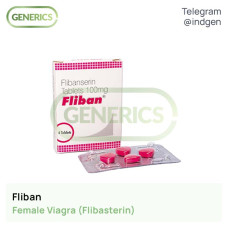


Addyi (Flibanserin) is an innovative medicinal product specifically developed for the treatment of acquired, generalized hypoactive sexual desire disorder (HSDD) in premenopausal women. The drug belongs to the pharmacological group of agents affecting the neurotransmitter systems of the brain, in particular, serotonin and dopamine regulation. Addyi (Flibanserin) is available in the form of tablets for oral use with a dosage of 100 mg of the active substance. The manufacturer of the drug is Sprout Pharmaceuticals, a company specializing in the development of therapeutic solutions in the field of women's sexual health. This medication became the first FDA-approved treatment for low libido in women, opening a new era in the approach to treating sexual dysfunction.
Unlike traditional stimulants, Addyi (Flibanserin) is not a hormonal drug and does not directly affect estrogen or testosterone levels. Its mechanism of action is based on the modulation of neurotransmitters responsible for the formation of sexual desire at the level of the central nervous system. The drug is intended for daily use, rather than "as needed" use, which fundamentally distinguishes it from drugs for the treatment of erectile dysfunction in men. Addyi (Flibanserin) has undergone extensive clinical trials involving more than 11,000 women, confirming its efficacy and safety when recommendations are followed. It is important to understand that the therapeutic effect develops gradually and requires systematic use for at least eight weeks.
In medical practice, Addyi (Flibanserin) is considered a first-line treatment for women whose decreased sexual desire is not related to medical, psychiatric, or interpersonal problems. The drug helps to restore the balance between excitatory and inhibitory processes in the brain, which contributes to the natural restoration of sexual interest. Addyi (Flibanserin) is dispensed strictly by prescription, as it requires a preliminary examination and exclusion of contraindications. Self-treatment with this agent is categorically not recommended due to the risk of serious adverse reactions, particularly severe hypotension and syncope.
The main indication for the use of Addyi (Flibanserin) is hypoactive sexual desire disorder, which is characterized by a persistent or recurrent decrease in sexual desire that causes marked distress or interpersonal difficulties. This condition is diagnosed when the lack of libido is not explained by other medical or psychiatric disorders, drug use, or serious relationship problems. Addyi (Flibanserin) helps women restore a natural interest in intimacy, reduce anxiety associated with sexual contact, and improve the overall quality of their sexual life. The drug affects the underlying neurobiological mechanisms that form sexual motivation, rather than simply masking symptoms.
Addyi (Flibanserin) is also used in cases where decreased libido occurs against the background of chronic stress, emotional exhaustion, or after long periods of sexual dissatisfaction. The drug is indicated for women who previously had a normal level of sexual desire but lost it over time for no obvious reason. Importantly, Addyi (Flibanserin) is not intended for the treatment of sexual disorders caused by menopause, gynecological diseases, or side effects of other medications. In such cases, it is necessary to first eliminate the root cause before considering the possibility of additional therapy with this agent.
Clinical studies demonstrate that Addyi (Flibanserin) contributes to an increase in the number of satisfying sexual events, an increase in the level of sexual desire, and a reduction in distress associated with low libido. The drug helps women experience more pleasure from intimate relationships, which has a positive effect on their emotional state and self-esteem. Addyi (Flibanserin) is not an aphrodisiac in the classical sense — it does not cause instant arousal, but gradually restores the natural cycle of sexual response. The therapeutic effect usually becomes noticeable after four to eight weeks of regular use, and the maximum benefit is achieved after a longer course of treatment.
The active ingredient of Addyi is flibanserin at a dosage of 100 mg per tablet. Flibanserin belongs to the class of multifunctional serotonin receptor agonists, acting primarily on 5-HT1A receptors, and antagonists of 5-HT2A receptors. This dual mechanism allows for simultaneously enhancing the activity of the dopamine system, responsible for motivation and reward, and reducing the excessive inhibitory effect of serotonin on sexual centers. Flibanserin also moderately affects noradrenaline receptors, which contributes to the general activation of the central nervous system and improvement of the emotional state.
Excipients of Addyi (Flibanserin) include lactose monohydrate, microcrystalline cellulose, croscarmellose sodium, magnesium stearate, and hypromellose. These substances ensure the stability of the tablet, the proper rate of its dissolution in the gastrointestinal tract, and the uniform release of the active substance. Lactose monohydrate acts as a filler, microcrystalline cellulose provides structural integrity to the tablet, and croscarmellose sodium promotes rapid disintegration of the tablet after entering the stomach. Magnesium stearate is used as a lubricant to prevent components from sticking to manufacturing equipment.
The mechanism of action of flibanserin is fundamentally different from other agents that affect sexual function. The drug does not dilate blood vessels in the genitals and does not stimulate peripheral nerve endings, but works at the level of the brain, restoring the balance between excitatory and inhibitory neurotransmitters. Due to this, Addyi (Flibanserin) eliminates the very neurochemical basis of low libido, rather than temporarily masking the symptoms. This approach provides a long-lasting therapeutic effect that persists even after the completion of the course of treatment in a significant portion of patients.
The standard recommended dose of Addyi (Flibanserin) for adult women is 100 mg once daily. The drug is taken daily, regardless of planned sexual activity, as its action is based on the gradual accumulation and stabilization of neurochemical changes in the brain. The duration of the treatment course is determined by the doctor individually, but is usually at least eight weeks to evaluate initial efficacy. If no improvement is observed after this period, the doctor may recommend continuing therapy for another four to eight weeks or reviewing the diagnosis.
Dosage adjustment of Addyi (Flibanserin) may be required in patients with impaired liver function, as flibanserin is metabolized in this organ. In moderate hepatic impairment, the doctor may reduce the dose or increase the interval between doses, while in severe impairment, the drug is contraindicated. Patients with renal impairment usually do not require dose adjustment, but careful monitoring of their condition is recommended. It is important not to exceed the prescribed dose, as this significantly increases the risk of developing hypotension, dizziness, and syncope.
Addyi (Flibanserin) is not intended for use in men, children, or adolescents under 18 years of age. The safety and efficacy of the drug for these populations have not been established, so its use outside of approved indications is strictly prohibited. The drug is also not recommended for postmenopausal women, as clinical trials were conducted exclusively in premenopausal women. Any change in dosage or duration of the course must be agreed with the doctor, taking into account the individual characteristics of the body and concomitant diseases.
Addyi (Flibanserin) is recommended to be taken in the evening, directly before bedtime, to minimize the risk of developing hypotension, dizziness, and somnolence, which may occur during the first hours after administration. The tablet should be swallowed whole with a sufficient amount of water, without chewing or crushing. Taking the drug in the morning or afternoon is not recommended, as it can significantly impair the ability to concentrate and drive vehicles. Adherence to the evening dosing regimen is critical for patient safety and efficacy of therapy.
Addyi (Flibanserin) can be taken with or without food, but eating high-fat food can slow down the absorption of the drug and delay the onset of its action. If a patient misses a regular dose, they should not double the next dose — they should simply continue with the regular dosing schedule the following evening. Missing a single dose usually does not lead to a significant decrease in the therapeutic effect, as the drug has a long half-life. However, systematic omissions can delay the achievement of the desired result, so it is important to maintain regularity of intake.
During treatment with Addyi (Flibanserin), you must completely avoid alcohol consumption, as combining flibanserin with ethanol significantly increases the risk of severe hypotension and loss of consciousness. It is also necessary to avoid consuming grapefruit juice, which can affect the metabolism of the drug in the liver and increase its concentration in the blood. Patients taking Addyi (Flibanserin) are advised to refrain from driving and operating dangerous machinery for at least six hours after taking the drug. Before starting therapy, the doctor should explain in detail all the rules of safe use and possible consequences of their violation.
The most common side effects of Addyi (Flibanserin) are dizziness, somnolence, nausea, and fatigue. These symptoms usually occur at the beginning of therapy and gradually decrease during the first two to four weeks of regular use. Dizziness can be quite pronounced, especially when standing up quickly from a bed or chair, so patients are advised to change body positions slowly. Somnolence is an expected reaction, as the drug affects serotonin receptors involved in the regulation of the sleep-wake cycle. Nausea is usually mild or moderate and can be reduced by taking the drug with a small amount of food.
Less common adverse reactions of Addyi (Flibanserin) include dry mouth, insomnia, headache, and anxiety. Some patients experience a paradoxical reaction in the form of sleep disturbance, despite the sedative effect of the drug. The headache is usually of moderate intensity and responds well to correction with conventional analgesics, but a doctor should be consulted before using them. Anxiety may occur as a temporary reaction to a change in neurochemical balance and usually disappears after the body adapts to the drug. It is important to inform the doctor about any unusual or persistent side effects for timely adjustment of therapy.
A serious, although rare, side effect of Addyi (Flibanserin) is severe hypotension and syncope, especially when combined with alcohol or other drugs that lower blood pressure. Patients should seek immediate medical attention if sudden weakness, a feeling of fainting, a sharp drop in blood pressure, or loss of consciousness occurs. Individual response to the drug may vary, so some women may experience side effects not listed in the package leaflet. If any alarming symptoms appear, it is necessary to stop taking the drug and consult a doctor to assess the benefit-risk ratio of continuing therapy.
Addyi (Flibanserin) has a number of absolute contraindications, among which the most important are severe liver function disorders, as the drug is metabolized by this organ. The drug is categorically prohibited for patients who consume alcohol due to the high risk of developing dangerous hypotension and syncope. Addyi (Flibanserin) must not be taken concomitantly with CYP3A4 inhibitors, such as ketoconazole, itraconazole, clarithromycin, and some antiviral drugs, as this leads to a significant increase in flibanserin concentration in the blood. The use of the drug is also contraindicated in women with known hypersensitivity to flibanserin or any excipient of the tablet.
The relative contraindications of Addyi (Flibanserin) include conditions accompanied by a predisposition to hypotension, in particular, severe cardiovascular insufficiency, recently suffered myocardial infarction or stroke. The drug is prescribed with caution to patients with depressive disorders, as flibanserin can interact with antidepressants and alter their efficacy. In women with epilepsy or other seizure disorders, Addyi (Flibanserin) is prescribed only after a careful risk assessment, as the drug can lower the seizure threshold. Patients with renal impairment require special monitoring during therapy, although formally this is not an absolute contraindication.
Addyi (Flibanserin) is not used during pregnancy and lactation, as the safety of the drug for the fetus and newborn has not been established. Women of reproductive potential are advised to use reliable methods of contraception throughout the treatment period. The drug is not intended for children, adolescents, and postmenopausal women, as clinical data for these groups are lacking. Addyi (Flibanserin) is generally not recommended for elderly patients due to an increased risk of falls associated with dizziness and hypotension. Before starting therapy, the doctor must conduct a full examination to exclude all possible contraindications and assess individual risk.
Addyi (Flibanserin) enters into clinically significant interactions with many drugs, so before starting therapy, it is necessary to inform the doctor about all medications the patient is taking. Especially dangerous is the combination with CYP3A4 enzyme inhibitors, which include antifungal agents, macrolide antibiotics, some antidepressants, and antiviral drugs. Concomitant use of these drugs with Addyi (Flibanserin) can lead to a multiple increase in flibanserin concentration in the blood, which significantly increases the risk of severe hypotension and loss of consciousness. You should also avoid combinations with other drugs that lower blood pressure, in particular, beta-blockers, calcium channel blockers, and diuretics.
Alcohol consumption during treatment with Addyi (Flibanserin) is strictly prohibited, as ethanol potentiates the hypotensive effect of flibanserin and significantly increases the risk of developing orthostatic hypotension and syncope. Even a small amount of alcohol can trigger a sharp drop in blood pressure, severe dizziness, and loss of consciousness, which poses a direct threat to life. Patients taking Addyi (Flibanserin) are also advised to refrain from driving and operating dangerous machinery for at least six hours after taking the drug. The effect of flibanserin on the ability to concentrate can persist longer, especially at the beginning of therapy or in case of increased individual sensitivity to the drug.
Addyi (Flibanserin) is a prescription drug, so its purchase is possible only with an appropriate prescription from a doctor. In Ukraine, the drug is available in specialized pharmacy chains licensed to sell prescription drugs. Patients can contact large pharmacies in Kyiv, Lviv, Odesa, Kharkiv, and other regional centers, where a proper range of women's health products is usually maintained. The cost of Addyi (Flibanserin) may vary depending on the pharmacy chain and region, so it is recommended to check availability and price in advance by phone or through online booking services.
Addyi (Flibanserin) must be stored in its original packaging at a temperature not exceeding 25 degrees Celsius, in a dry place protected from direct sunlight. The drug should be kept out of reach of children, as accidental ingestion of tablets by a child can have serious consequences. Some online pharmacies offer a delivery service for prescription drugs, but to place an order, you must provide an electronic prescription from a doctor. Before purchasing Addyi (Flibanserin), be sure to consult your doctor about the appropriateness of using this drug in your particular case, as self-treatment can be ineffective and even dangerous to health.
Across Ukraine
Self-medication can be dangerous to your health. Consult a doctor before using this medication..


