Buy Flibanserin in Ukraine
Sort By:
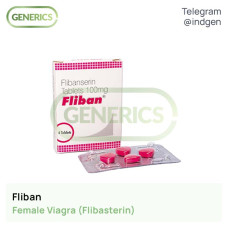


FLIBAN is a medicinal drug whose active substance is flibanserin. The agent belongs to the group of serotonin receptor modulators and is used to correct reduced sexual desire in women. Unlike drugs for erectile dysfunction in men, FLIBAN acts on the central nervous system rather than on the vascular tone of the genitals. The drug is intended for oral use and is available in the form of tablets for internal administration. It is often referred to as "female Viagra," but this comparison is simplified and does not reflect the true mechanism of action.
The pharmacological group of FLIBAN encompasses agents that affect the neurotransmitter balance in the brain. Flibanserin simultaneously stimulates serotonin receptors of the 5-HT1A type and blocks 5-HT2A receptors, as well as moderately affects dopaminergic transmission. This combination helps to reduce the inhibitory effect of serotonin on sexual desire and support motivational pathways associated with dopamine and norepinephrine. The clinical use of the drug is targeted at premenopausal women with diagnosed hypoactive sexual desire disorder. Before starting therapy, consultation with a doctor and exclusion of other causes of reduced libido are required.
FLIBAN is not an emergency agent and does not increase arousal "on demand." The effect develops gradually under the condition of regular daily intake for several weeks. The individual response of the body may vary significantly depending on age, concomitant diseases, hormonal levels, and psycho-emotional state. Self-medication is unacceptable: the decision on prescription, duration of the course, and dose is made only by a qualified specialist. Any changes in well-being during therapy should be discussed with a doctor.
The main indication for the use of FLIBAN is hypoactive sexual desire disorder in premenopausal women. This refers to a persistent decrease or absence of sexual fantasies and desire for sexual activity, which causes marked distress or interpersonal difficulties. It is important that the problem is not a consequence of another mental or somatic disease, side effects of medication, or serious relationship problems. The doctor evaluates the duration of symptoms, their impact on the quality of life, and excludes reversible causes of decreased libido. Only after this can the prescription of FLIBAN be considered as part of a comprehensive care plan.
The drug may be appropriate when non-pharmacological approaches — psychotherapy, working with a partner, correction of sleep and stress regimens — have not yielded sufficient results. FLIBAN does not treat vaginal dryness, pain during intercourse, or erectile dysfunction of the partner; these conditions require separate diagnostics. Also, the agent is not indicated for increasing libido "preventively" in women without a clinically significant disorder. The goal of therapy is to reduce distress associated with the lack of desire, rather than to guarantee a certain frequency of sexual contact. The evaluation of effectiveness is conducted after several weeks of regular intake.
In individual clinical situations, a doctor may discuss FLIBAN in the context of comprehensive sexual health management, if other factors have already been corrected. The prescription is always individual and based on the ratio of expected benefits and risks. Patients are explained that the response to treatment varies, and some women may not feel any noticeable improvement. In the absence of effect after the recommended observation period, therapy is usually discontinued. Repeated courses without re-evaluation by a doctor are not recommended.
The active substance of FLIBAN is flibanserin — a synthetic compound that modulates serotonin and dopamine pathways in the central nervous system. The main mechanism is associated with agonism to 5-HT1A receptors and antagonism to 5-HT2A, which changes the balance of neurotransmitters in brain areas responsible for sexual motivation. Additionally, an effect on the levels of dopamine and norepinephrine, which are involved in the formation of desire and reward, is noted. Unlike hormonal agents, flibanserin is not estrogen, progesterone, or testosterone. The therapeutic effect depends on a stable concentration of the substance with daily intake.
The composition of the tablets also includes auxiliary components required for stability, dissolution, and ease of use: fillers, binders, coating substances, and other technological ingredients. They do not have an independent pharmacological effect in therapeutic doses, but they may be important in case of individual intolerance. Patients with allergies to auxiliary substances should carefully read the instructions for the specific package. The bioavailability of flibanserin can change under the influence of food and certain drug interactions. That is why the method of administration and concomitant therapy are agreed upon with a doctor.
After absorption, the active substance undergoes metabolism in the liver with the participation of enzyme systems, in particular cytochrome P450. Impaired liver function significantly alters the concentration of the drug in the blood and increases the risk of undesirable reactions. Metabolites and the unchanged substance are excreted from the body mainly through the intestines and partially by the kidneys. Understanding pharmacokinetics helps to explain why simultaneous intake with alcohol or strong inhibitors of liver enzymes is dangerous. Any doubts regarding composition and compatibility should be clarified before starting treatment.
The standard regimen for adult women usually involves taking one tablet at night in accordance with the doctor's recommendations and the official instructions. Nighttime administration is not chosen by chance: it helps to reduce the severity of drowsiness and dizziness during the day. Increasing the dose on one's own for a faster effect is categorically prohibited — this increases the risk of hypotension, fainting, and severe sedation. The duration of the course is determined by the doctor; often, effectiveness is evaluated after about 8 weeks of regular use. If there is no improvement, continuation of therapy is usually impractical.
Dose adjustment may be required in case of concomitant diseases, taking other medications, or the occurrence of side effects. For patients with impaired liver function, FLIBAN is in most cases not prescribed due to the risk of accumulation of the active substance. Renal impairment also requires caution and individual assessment. Older age itself is not the sole criterion, but concomitant polypragmasy and vascular risks make therapy more responsible. Any changes in the regimen should only be made after an in-person or remote consultation with a specialist.
Skipping several days of administration reduces the stability of the drug concentration and may weaken the expected result. At the same time, a "double dose" the next day does not compensate for the missed one and is dangerous. The doctor may recommend symptom diaries or standardized questionnaires for a more objective assessment of dynamics. It is important to record not only changes in desire, but also side effects, sleep quality, and general well-being. The final decision on continuing, pausing, or canceling FLIBAN is made together with the doctor.
FLIBAN is taken orally, washed down with a sufficient amount of water, preferably before bedtime. This time of day reduces the impact of drowsiness on daytime activity, work, and driving. Regarding food, the instructions and recommendations of the doctor should be followed, as intake with food may alter absorption. Crushing or dissolving the tablet unnecessarily is not recommended unless directly provided by the manufacturer. Regularity of intake is more important than trying to "adjust" the dose to a specific day of intimacy.
If a dose is missed, the next dose is usually taken at the usual night time; doubling the number of tablets is prohibited. In case of vomiting shortly after administration, the decision on a repeated dose is agreed upon with a doctor or instructions to avoid overdose. During treatment, one should abstain from alcohol, as the combination sharply increases the risk of a sudden drop in blood pressure and loss of consciousness. It is also worth being cautious in situations requiring quick reactions, especially at the beginning of therapy. Any unusual symptoms are a reason for an unscheduled consultation.
A fixed ritual helps to maintain the discipline of administration: the same time, a place for the package, reminders on the phone. Do not share the drug with other people, even if the symptoms seem similar: indications and risks are evaluated individually. Before surgical interventions, dental procedures under sedation, or starting new medications, inform the doctor about taking FLIBAN. Sudden self-discontinuation usually does not create a withdrawal syndrome, but the plan for completing the course is best discussed in advance. Control visits allow for timely adjustment of treatment.
Most often, during the intake of FLIBAN, drowsiness, dizziness, nausea, and increased fatigue are noted. These phenomena are associated with the effect on the central nervous system and are often more pronounced in the first days or weeks. Some patients experience dry mouth, insomnia, or anxiety, although the sedative effect occurs more frequently. Lowering blood pressure and a feeling of "emptiness" in the head when standing up require special attention. If symptoms interfere with daily activities, the doctor may reconsider the feasibility of continuing therapy.
Less frequent reactions include palpitations, constipation or diarrhea, rash, decreased attention, and coordination. Rare but potentially dangerous conditions include fainting, severe hypotension, and severe allergic manifestations. Combination with alcohol, strong CYP3A4 inhibitors, or antihypertensive agents significantly increases the likelihood of serious side effects. The individual response of the body is unpredictable: even a standard dose is easily tolerated by one person, while in another it causes pronounced discomfort. Therefore, self-monitoring in the first weeks is an essential element of safe treatment.
Seek immediate medical attention in case of loss of consciousness, sudden weakness, difficulty breathing, swelling of the face or throat, or severe dizziness with falls. Any persistent or worsening side effects should be reported to the doctor, even if they seem "tolerable." Do not try to mask drowsiness with stimulants or extra caffeine without approval — this may distort the pattern of side effects. The doctor will evaluate whether the complaints are related to FLIBAN, concomitant diseases, or other medications. A timely response reduces the risk of complications.
Absolute contraindications usually include severe hepatic impairment, hypersensitivity to flibanserin or any component of the tablet, as well as simultaneous use of strong CYP3A4 inhibitors. The drug is not intended for men and is not used to treat sexual disorders in the male population. FLIBAN is not used during pregnancy and breastfeeding due to insufficient safety data and potential risks to the child. Childhood and adolescence are also contraindications: the agent is developed for adult premenopausal women. Any "experimental" use outside indications is unacceptable.
Relative limitations include a tendency to hypotension, depressive states, concomitant use of sedatives, sleep disturbances, and professional activities with high demands on attention. In postmenopause, the ratio of benefit and risk may differ, so the decision is made by the doctor individually, often taking into account alternatives. Elderly patients require special caution due to polymorbidity and greater sensitivity to sedation. Alcohol abuse is a serious obstacle to safe prescription. Before starting therapy, a complete medical and allergological history is collected.
If pregnancy occurs during treatment, administration is immediately discontinued and a doctor is consulted. Women of reproductive age should discuss contraception methods and pregnancy plans even before starting the course. If new diagnoses appear — liver, heart diseases, mental disorders — the treatment regimen is reviewed. Self-resumption of intake after a long break without consultation is not recommended. Patient safety always has priority over the expected impact on libido.
FLIBAN has clinically significant interactions with drugs that affect liver enzymes, especially CYP3A4. Strong inhibitors of this enzyme can sharply increase the concentration of flibanserin in the blood and increase the risk of hypotension and fainting; such a combination is usually contraindicated. Caution is also required with other agents with sedative potential: sleeping pills, anxiolytics, certain antihistamines, and opioid analgesics. Antihypertensive drugs can enhance the reduction of blood pressure. Before starting any new therapy, including over-the-counter drugs and herbal supplements, agreement with a doctor is necessary.
Alcohol while taking FLIBAN is particularly dangerous: even moderate doses of alcohol increase the likelihood of sudden drowsiness, drop in blood pressure, and loss of consciousness. Patients are recommended to completely abstain from alcoholic beverages throughout the course. At the beginning of treatment and if dizziness occurs, one should refrain from driving and operating machinery. The ability to concentrate may be reduced even without a subjective feeling of "intoxication." A responsible attitude to interactions is a key condition for the safe use of the drug.
FLIBAN can be searched for in retail pharmacies and on licensed online platforms operating in accordance with the requirements of Ukrainian legislation. Availability, dispensing form, and the need for a prescription depend on current regulatory norms and the specific trade position, so up-to-date information is clarified with a pharmacist and doctor. Buying "from hand" or on doubtful websites without quality documents is dangerous due to the risk of counterfeit and unknown composition. The drug should be stored in a dry place at the temperature specified in the instructions, away from children and direct light. Delivery by pharmacy services is possible where permitted by drug circulation rules, in compliance with transportation conditions.
Before purchasing and using FLIBAN, a consultation with a doctor is mandatory: only a specialist can confirm indications, exclude contraindications, and evaluate drug interactions. Effectiveness and tolerability are individual; what helped one patient may not suit another. Do not use the drug as a substitute for psychotherapy, treatment of hormonal disorders, or relationship correction if these factors are primary. In case of doubts about the originality of the packaging, instructions, or appearance of the tablets, contact the pharmacy and do not start taking them. A responsible approach to purchasing and treatment protects health and increases the chance of a safe result.
Across Ukraine
Self-medication can be dangerous to your health. Consult a doctor before using this medication..


